A guide to timing belt inspections to help identify signs of wear and potential failure before they occur.
Inspection Tips At A Glance:
Regularly inspecting timing belts can identify potential issues and unusual wear early to avoid total belt failure.
Review the condition of the belt drive components to find signs of unusual wear, environmental degradation, pulley misalignment, and belt tension issues.
Completing inspections on a consistent basis instead of basing them on shelf or service life can catch issues outside of regular wear and tear earlier.
What to look for during a timing belt inspection
It can be hard to know where to begin a timing belt inspection, especially because there are so many factors that can impact wear and performance. The Application Engineers at BRECOflex identified three main types of inspections that can be done to identify issues before they turn into failures:
Drive inspection, where you look for signs of major or unusual wear on the drive components that are usually a result of design, operational, or installation issues.
Environmental inspection, check for degradation that could be caused by environmental factors like chemical, UV, and temperature exposure.
Non-physical inspection goes beyond visual inspection, potentially requiring tools to measure and identify issues and making adjustments to the equipment.
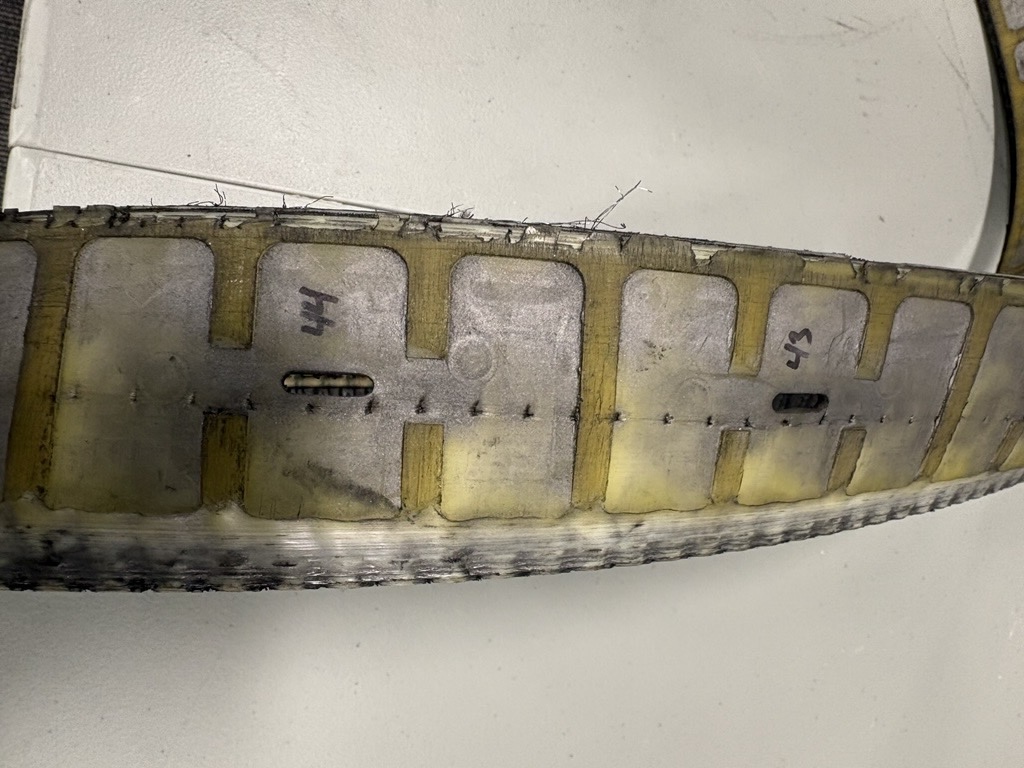
Look for signs like missing or loose belt teeth, uneven wear, or visible tension filaments.
Inspecting your drive components for wear seems obvious, but if you aren’t sure where to look and what signs should catch your eye, it can be easy to miss something. Here are four specific things to check when doing a drive inspection:
Where to Look
What to Look For
What Could Cause It
Entire Belt
Tension filaments sticking out
Excessive abrasion
Over-tensioning
Misalignment
Shock loading
Belt Teeth
Uneven wear
Stretched teeth
Teeth separating from the belt
Teeth squeezed together
Overloading
Poor tensioning
Improper pulley size
Shock loading
Misalignment
Belt Edges
Reduced belt width
Exposed cords
Obstruction
Misalignment
Improper tracking
Belt Back
Cracking
Tears
Undersized pulleys
Improper storage
If you find any of these issues during your inspection, it can be a sign that something is wrong. Left unaddressed, that seemingly small problem can cause a failure that makes your entire production stop. Misalignment, shock loading, and improper tensioning are all examples of underlying causes that can wear down your belt faster than anticipated. You can find a more comprehensive outline of the causes and solutions for these issues in our timing belt problem troubleshooting guide.
Pulley Inspection: Incorporating pulley inspection into your maintenance routine can prevent issues from developing down the road. It’s especially important to check pulleys when timing belt problems are found during a drive inspection, as a worn pulley could be the cause and damage future replacement belts. Look for signs of unusual and uneven wear across the width, loose connections, worn bearings, debris, and check their alignment to ensure your pulleys are working as they should.
Environmental inspection
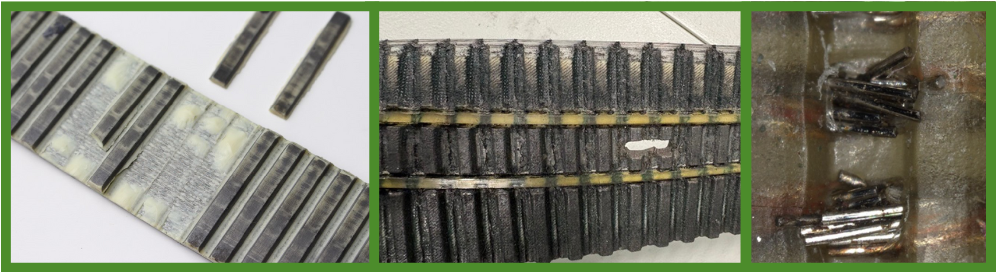
Belt cracking and swelling can be signs of environmnetal degredation.
Some conditions can cause degradation if the timing belts aren't designed to be exposed to specific environmental factors. Degradation typically presents itself differently than operational or design issues, like the ones you’ll find during a drive inspection. Here’s how to identify issues related to environmental factors during a timing belt inspection:
Where to Look
What to Look For
What Could Cause It
Entire Belt
Swelling
Discoloration (yellow/brown coloring)
Cracks
Loss of flexibility
Moisture absorption
UV exposure
Chemical exposure
High or low temperature exposure
Tension Members / Pulleys
Signs of rust or corrosion
Moisture exposure
When signs of accelerated degradation are present, it’s usually an indication that the application environment and belt materials are incompatible. If that’s the case, BRECOflex offers several material options for timing belts, backings, and pulleys that are designed to withstand different environmental conditions.
Uneven edgewear, like that shown above, can be a sign of misalignment.
A non-physical inspection goes beyond looking at the timing belt itself and instead looking at how it’s operating. This includes:
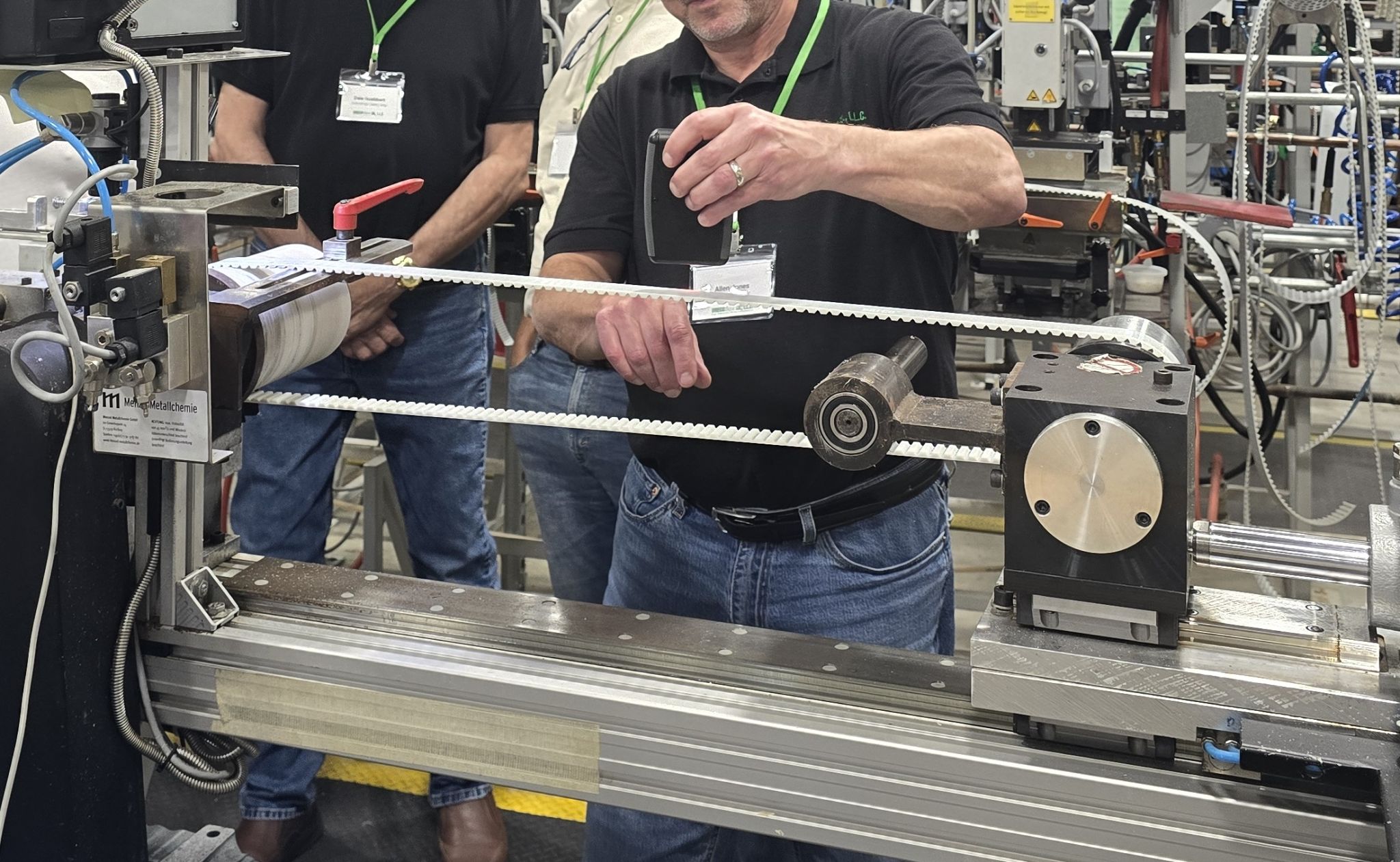
Confirming pulley alignment: Regularly checking that your alignment is within allowable axial alignment variation makes it easy to identify and rectify any issues before it causes physical damage to a belt.
Checking belt tension: Monitoring timing belt tension after initial installation and regularly over time is a great way to find potential issues. Loss of tension can be the result of improper minimum pulley and idler diameters, loose clamps or bearings, or a sudden jam, which can be fixed with retensioning. It can also be a sign of fatigue, which can show as tension loss based on bending cycles and diameters, or as broken filaments between the belt’s teeth.
Customers often look for the shelf and service life of timing belts as a minimum performance and quality guarantee and a benchmark for maintenance planning.
Shelf life: Represents how long a timing belt can be in storage without use. This metric is most useful for customers who keep replacement belts on hand. BRECOflex polyurethane timing belts do not have a defined shelf life but have an estimated shelf life of about 7 years when stored properly. Actual shelf life will depend on the storage conditions.
Service life: Represents how long a belt can operate, typically measured in time or cycles (e.g. 4 years or 500,000 cycles). BRECOflex does not provide a defined service life for its timing belts because of the wide variety of applications in which belts are used.
Unlike neoprene/rubber belt competitors, BRECOflex polyurethane timing belts (PU/TPU) do not have a defined shelf or service life. There are many application-specific variables that impact a polyurethane timing belt’s lifespan, such as UV exposure, chemicals/vapors, humidity, temperature, and load, all of which have a direct impact on how long a timing belt will last.
Why inspecting timing belts is important
Incorporating regular timing belt inspections into regular maintenance schedules is an excellent way to avoid failures that can result in unexpected downtime and product loss. Ideally, your inspection won’t show any signs of accelerated wear.
But there’s always a chance that you will spot something unusual. If you do, it’s in your best interest to identify the root cause to mitigate problems in the future. Sometimes that’s easier said than done. When that’s the case, contact BRECOflex for free troubleshooting support from our in-house application engineering team.
.jpg)
.jpeg)