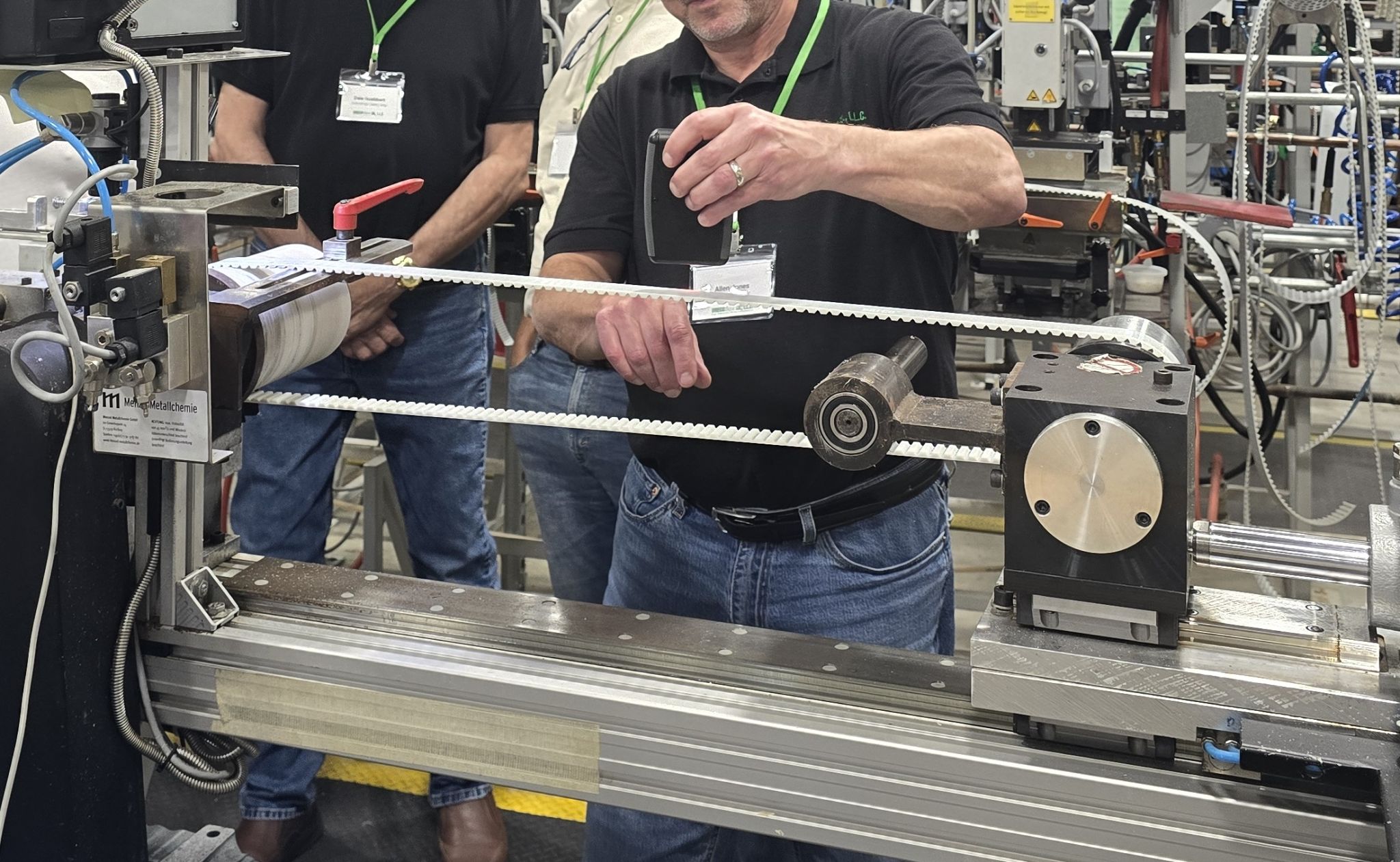
It may seem like the biggest impact of a broken timing belt is a simple replacement, but timing belt failures can actually result in unplanned downtime, product loss, and increased labor expenses, all of which affect your bottom line.
Timing belt failures don’t happen out of nowhere. There are often warning signs and red flags that will tell you something’s not right with your components, but if you don’t address them in time, it can lead to your timing belt breaking completely.
The good news is that many types of timing belt failure are preventable, so you can avoid the expensive aftermath. This guide explores the five most common types of polyurethane timing belt failure, what causes timing belts to break, and how to stop them from happening in the future.
Broken timing belts can be incredibly frustrating, especially when the root cause isn’t obvious. Below are some of the most common polyurethane timing belt failures and how to identify them.

Tensile failure is when a timing belt snaps because the tension members within the belt couldn’t handle the applied load. It often leaves an angled, ragged tear across the belt.
Commonly seen in linear drives and applications using welded belts, tensile failure is usually the result of shock loading, an undersized belt, or improper tension.

Shear failure impacts the belt’s teeth. It can look like individual teeth being torn off, or as if the teeth have been pushed or compressed together. Tooth shear usually happens when pulleys are too small for the belt, or when the belt is tensioned incorrectly. In rare cases, misalignment can cause shear failure.

If tension members are poking out of the belt, it likely experienced tensile fatigue. This happens when belts are over-flexed or sharply bent, causing the cords to break internally and push outwards.
Fatigue failures usually occur when pulleys don’t meet the minimum diameter requirements for the application. Improper handling can also lead to fatigue failure.
Weld zone failure occurs when a spliced and welded belt tears at the belt’s welded joint, usually because it was used in a power transmission application. Spliced and welded belts aren’t recommended for power transmission for this very reason – they have lower tensile strength than other types of timing belts and can’t handle the torque and load requirements necessary for power transmission.
.jpeg)
Timing belt degradation can present itself in a few ways, like cracking, swelling, rust, or flaking. Seeing signs of degradation usually indicates chemical exposure, heat damage, or environmental conditions that exceed the belt’s material limits. You can find information about chemical and temperature compatibility in our interactive timing belt catalogs.
Timing belts can break naturally over time, but premature failure often points to a mismatch between the belt and the application. This can mean a few different things:
While these are some of the leading causes of timing belt failure, the exact reasons for belt breaks are application specific and will likely require you to troubleshoot your timing belt problems to find the exact source of the failure. If you need help, you can contact BRECOflex’s free application engineering support team.
Broken timing belts can cause a slew of issues from both an operational and a cost perspective. The most obvious cost is replacing the belts and any other equipment that may be damaged because of the failure. Depending on the source of the issue, it may even require a complete redesign of the system to prevent the same problems in the future.
While replacement parts are costly, the biggest losses come from the downstream effects of a broken timing belt. Unplanned downtime is one of the most significant impacts. Lost production, idle labor, shipping delays, emergency maintenance costs, and potential overtime needs can all be expensive consequences of one broken timing belt.
Delayed shipments can cause issues with customers, increasing the burden on your service representatives, or you might have to cover the cost of expedited shipping to meet consumer needs. Emergency maintenance labor can also be quite costly.
Then there’s the issue of product loss. When timing belts break, you can lose synchronization across your process, making your products damaged or defective. A complete and unplanned stop to time-sensitive processes can cause an entire batch of products to be unusable.
All in all, an unplanned timing belt failure costs more than just the replacement part. It can trigger several expenses related to labor, production, product losses, customer delays, and emergency maintenance, which are far more expensive than proactive prevention measures.
Broken timing belts can cause huge ripple effects for the rest of your operation, which is why it’s important to catch issues before a total failure occurs. Here are some warning signs that a timing belt failure could be on the horizon:
The best way to catch these early failure symptoms is by creating a regular timing belt maintenance and inspection schedule. You’ll be able to notice changes in performance or appearance early on, and plan for necessary maintenance and repairs, instead of waiting for the belt to break.
Low quality timing belts can fail faster than ones from a reputable brand like BRECOflex. Investing in reliable timing belts can help you avoid expensive and potentially catastrophic failures.
BRECOflex has been the leader in polyurethane timing belts for over 35 years for a reason. We refuse to sacrifice quality, because we know how integral it is to keeping your production lines moving and equipment running.
But we’re more than just a component supplier. BRECOflex prioritizes supporting you beyond your purchase with our top-of-the-line customer service team and free engineering support. Our application engineers can help find the root cause of timing belt failures and identify potential solutions at no cost to you.