Choosing the right timing belt pitch is an important part of designing a reliable belt drive system. The pitch can affect the load the system can handle, how smoothly it operates, and its accuracy. This guide breaks down how pitch affects how timing belts work, how to measure it, and key considerations about timing belt pitch to achieve a durable, efficient motion system.
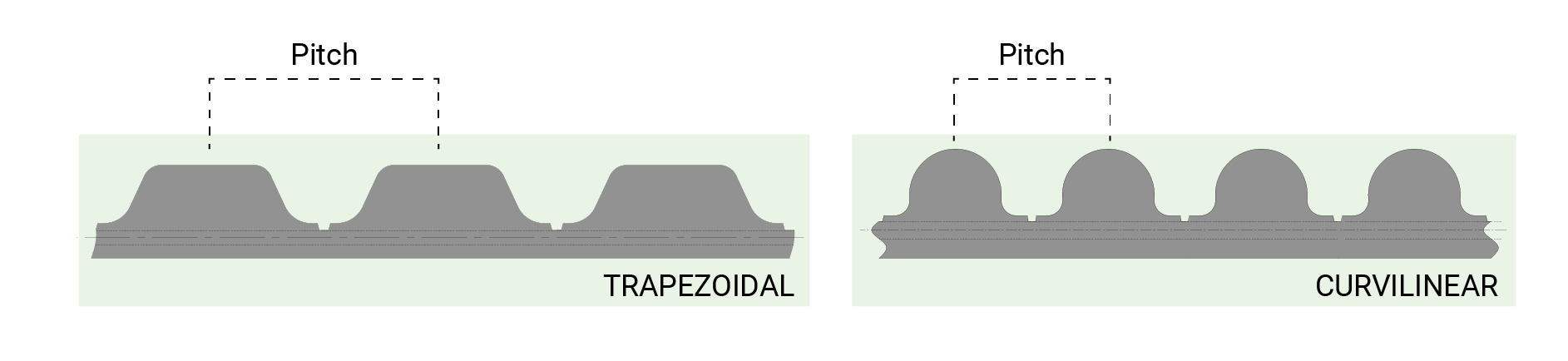
Timing belt pitch represents the distance between the center of each belt tooth. A critical metric when designing drive systems, pitch determines a timing belt’s load capacity, precision, and the pulleys required.
There are two types of timing belt pitch: metric pitches (measured in millimeters) and imperial pitches (measured in inches). Metric timing belt pitches are far more common in polyurethane timing belts and are typically preferred in new designs due to their precision, availability, and high-performance capabilities.
The table below outlines some of the key differences between metric and imperial pitch timing belts:
The shape of a timing belt tooth is called a profile, and like pitch, it can impact the components used in your system.
The two most common tooth shapes for timing belts are trapezoidal and curvilinear. Trapezoidal teeth provide high accuracy and limited backlash, making them an excellent choice for indexing and positioning applications. Curvilinear belt teeth are best suited for high-speed and high-torque systems because their round profile distributes load more evenly across the tooth, reducing stress and improving durability.
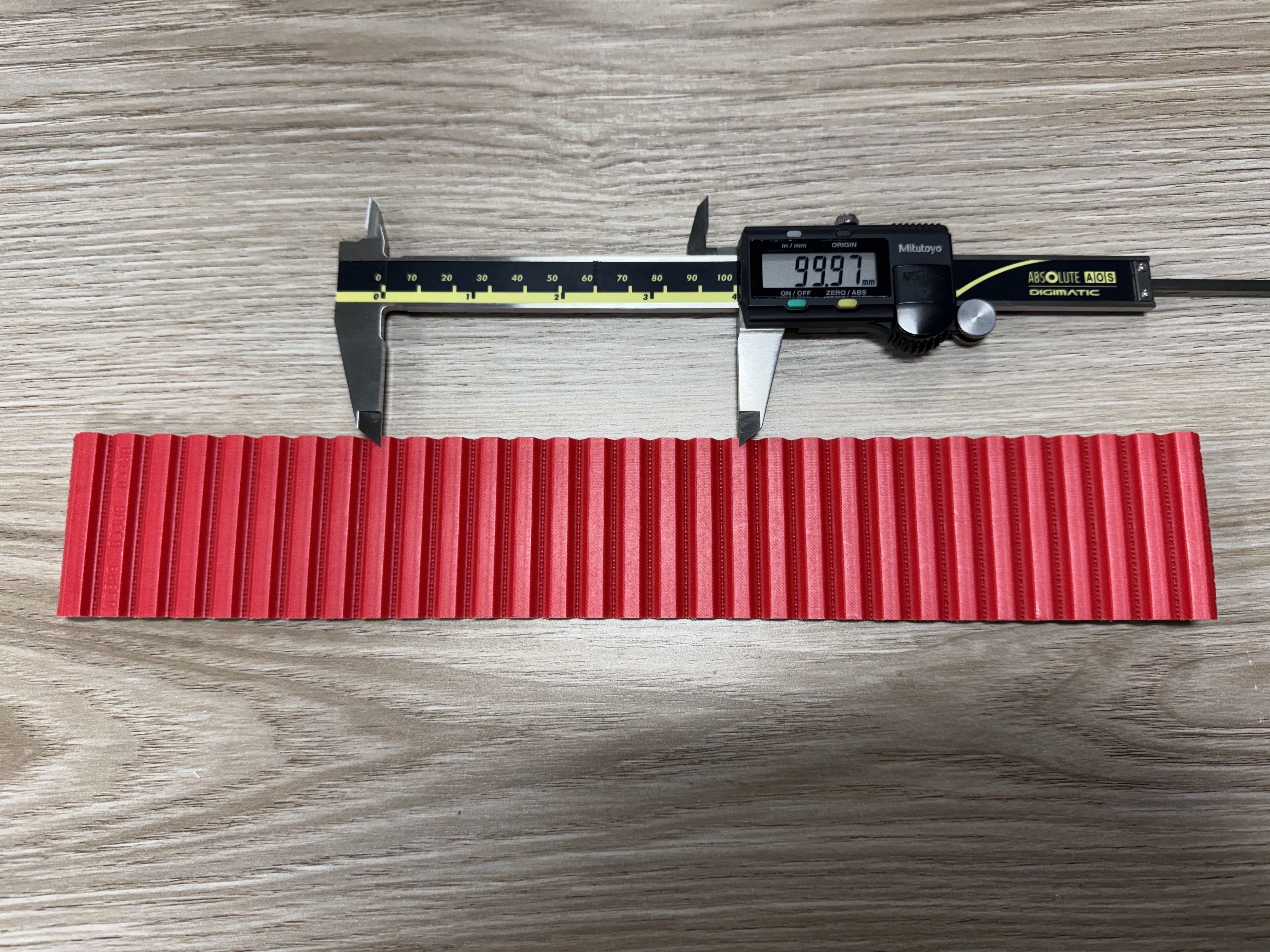
Measuring the pitch of a timing belt can be done in a few simple steps. Watch our video on identifying timing belt pitch, or read the steps below:
You can also download and print our pitch chart, which has belt pitches to scale that belts can be compared to find the matching pitch. Print out the belt pitch chart sheet linked below and ensure the document is printed to "actual size". Align your belt teeth with the belt pitches on the chart to identify both pitch and belt profile. Your belt pitch should be the one in which your belt teeth perfectly align with.
The pitch of a timing belt has a direct impact on system performance and overall drive design. Larger and smaller pitch belts are each suited to different operating conditions, depending on factors like load, torque, speed, and space constraints.
Larger pitch timing belts (12.7 mm, 20 mm, etc.) have bigger teeth that increase stiffness and allow them to handle higher loads and transmit more torque than small-pitch belts. Because of their tooth size and stiffness, large-pitch belts require larger pulley diameters to maintain proper tooth engagement and avoid premature wear, an important consideration in applications where space is limited. With higher tooth shear strength and greater load capacity, large-pitch belts are often used in heavy-duty applications.
Small-pitch belts, on the other hand, provide faster, smoother, more precise motion. With more teeth engaged with the pulley at any given time, smaller pitch belts reduce vibration and boost positioning accuracy, making them popular in high-precision systems like pick-and-place systems and robotics.
The table below outlines some of the key performance differences between large and small pitch belts:
Picking the right timing belt pitch is an important step in the initial design process. As a general rule, large-pitch belts are best suited for high-load, high-torque, heavy-duty applications, while small-pitch belts are typically used in high-accuracy, high-speed systems. It’s also important to make sure that both the pitch and the profile of the timing belt match those on the pulleys, otherwise you risk premature timing belt failure.
Ultimately, the optimal timing belt pitch depends on a variety of factors, including the loads the system must handle, the required motion accuracy, operating speed, and space constraints. In many cases, these requirements can compete with one another, and you’ll need to consider things such as timing belt type, materials, and more to find the solution that best balances capacity and motion performance.
When the answer isn’t clear, BRECOflex has free engineering design support to match the right timing belt pitch to your system’s needs, helping you achieve reliable performance and long service life.